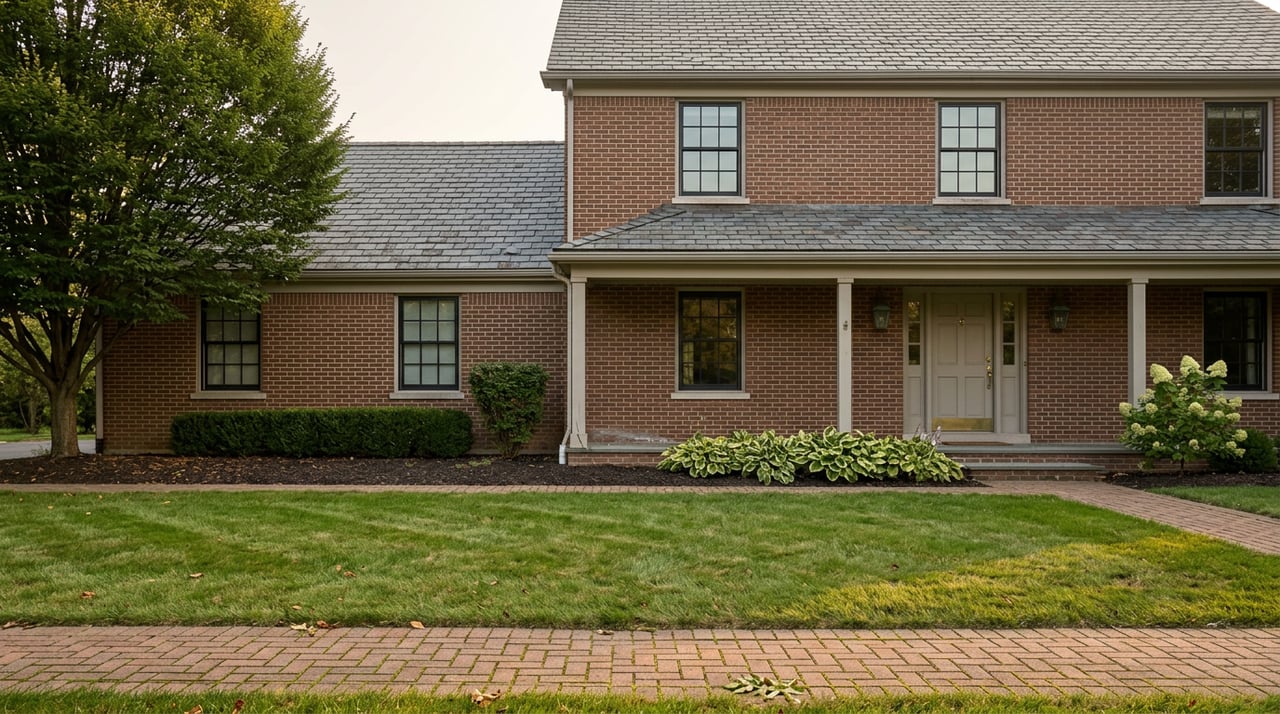
Zionsville's Historic District Rules: What They Cover and What Buyers Should Confirm
September 3, 2026
September 3, 2026
Ask three different Village homeowners what the Town's historic district rules cover and you'll likely get three different answers. One will tell you painting your trim is a permit issue. Another will insist the rules only apply to a handful of landmark houses on Main Street. A third will say the whole thing is toothless anyway. All three are describing a system that was deliberately built to change shape over time, and the shift may already be underway.
Zionsville created its Historic Preservation Commission through Ordinance 2022-06, and buried inside that ordinance is a built-in sunset clause on how lightly it enforces itself. If you're buying, selling, or planning work on a home inside the Village core, that clause matters more than almost anything else in the ordinance, because the version of the rules you've heard about from a neighbor or a 2022 news story is not necessarily the version in effect today.
The Town Council didn't arrive at this unanimously. The first reading of the ordinance passed 5-2, with Town Council President Jason Plunkett and council member Craig Melton voting against it. Some residents worried about their homes being labeled "non-contributing." Others wanted the protection. The push came from a citizen group called Preserve Zionsville, working alongside Indiana Landmarks, and it culminated in the commission structure that governs Village properties today.
That structure runs on a document called a Certificate of Appropriateness, or COA. Before a permit is issued or work begins on a covered activity, it has to be in place. The application goes to the commission's office, and by ordinance, if the commission doesn't act within thirty days of filing, the certificate is automatically issued. Fees are set by the Town's Schedule of Fines and Fees rather than a flat number in the ordinance itself, which means the cost of applying can change over time without a new ordinance vote.
Not every old house in the Village carries the same weight under this system. In 2021, the Town commissioned a new architectural survey through the SullivanMunce Cultural Center, updating a 1983 inventory that was decades out of date. The new survey assigns each property a rating: Outstanding, Notable, Contributing, or Non-Contributing.
The baseline test for "Contributing" status is a construction date at or before 1962, combined with a building that still retains its basic form and shape, regardless of newer materials or additions layered on top. That 1962 cutoff isn't arbitrary. Surveyors extended the period of significance to that year specifically because of the construction of the downtown post office, a marker commonly used to define when a historic district's architectural story closes.
The practical difference matters at the closing table. A Contributing property carries more weight in how the commission evaluates proposed changes to it. A Non-Contributing one faces a lighter review, though it isn't automatically free of oversight if it sits inside the district boundary. And the boundary itself isn't just "downtown." The 2021 survey extended it west into a pocket generally bounded by Oak, 9th, and Laurel Streets, specifically because of historic architecture found there. A house a few blocks off Main Street can be just as covered as one facing it directly.
Here's the part that gets missed in casual conversation about the district, and it's the reason this piece exists.
Ordinance 2022-06 allows the Town Council to phase in a historic district in two stages, and Zionsville's Village district was established this way, commonly referred to as a Conservation District during its first phase. During that first phase, which the ordinance sets at three years from the date of adoption, a Certificate of Appropriateness is required only for three things: demolishing a building, moving a building, or new construction of a principal or accessory structure visible from a public way. Routine exterior changes such as replacing siding, swapping windows, or repainting are not subject to COA review during this window.
At the end of that three-year period, the district becomes fully established. At that point, the full COA requirement kicks in for the broader list of activities the ordinance actually names, which includes exterior alterations, maintenance involving a color change, and additions, not just demolition and new construction.
The ordinance had its first reading in April 2022 and a second reading scheduled for May 2022. If adoption tracked that timeline, a three-year Conservation District phase would run out sometime in spring 2025. We're now well past that point. That means a homeowner or buyer who's been operating on the assumption that only demolition and new construction trigger review in the Village may be working from a version of the rules that no longer applies. The lenient window was never meant to be permanent. It was a runway, and the runway has very likely already ended.
If you're under contract on a Village property, or planning a renovation there, this is worth confirming directly with the commission before you assume anything about what does or doesn't need a certificate. The ordinance text is public record and the commission office can tell you where a specific address stands today.
It's worth separating this from another historic designation that comes up in the same conversations. The Traders Point Hunt Rural Historic District, listed on the National Register of Historic Places in 2009, sits nearby in Eagle Township and covers a very different kind of property, agricultural landscapes, farmsteads, and estates rather than the platted village lots downtown. National Register listing on its own doesn't come with a local commission reviewing your paint color or your addition. That level of oversight is specific to locally created districts like the Village's, administered under Ordinance 2022-06. A property can carry National Register recognition without ever facing a Certificate of Appropriateness requirement, and a property inside the Village's locally designated boundary faces that requirement regardless of whether it's individually listed on the National Register at all. Knowing which kind of designation applies to a specific address changes what you should expect during a transaction.
If you're selling a Contributing property in the Village, let your buyer understand what review might apply to any changes they're planning, especially if those changes go beyond what the Conservation District phase used to allow. If you're buying, ask the Town directly whether the property's district phase status has changed before you budget for a project assuming light-touch review. If you're already renovating, the smart move is the same one preservation offices everywhere recommend: call before you start, describe the project, and find out whether staff can approve it administratively or whether it needs a full commission hearing. That thirty-day window in the ordinance is a ceiling, not a guarantee of a fast answer, and a project timeline built around the old three-year leniency could run into delays nobody budgeted for.
Does this apply to interior work? The ordinance is built around exterior appearance, visibility from a public way, and the appurtenances attached to a building like fences, steps, and light fixtures. Interior renovations generally sit outside its scope, though any interior work still has to clear normal building permit review.
Does a Contributing rating change my property taxes? Nothing in the ordinance or the survey documentation ties the rating to a tax reassessment. The classification is about architectural review, not valuation.
What if my house is rated Non-Contributing? It faces a lighter version of the same process, not an exemption from the district boundary itself. If the address sits inside the mapped Village district, it's worth confirming its current phase status rather than assuming a lower rating means no review at all.
Zionsville's Village charm is exactly what draws buyers here, and that charm is the product of a set of rules that are, right now, tightening in ways most people haven't tracked. If you're weighing a purchase, a sale, or a renovation on a Village property and want a clear read on what a specific address actually faces, Scott Harmeyer can help you sort out what applies before you're committed to a timeline that assumes the old rules. Book a consultation and get the answer before you need it.
This article is general information, not legal, tax or financial advice. Consult a qualified professional about your situation.
Stay up to date on the latest real estate trends.


Whether you are buying, selling, or looking to get pre-qualified, you’ve come to the right place to achieve success in our exciting housing market. Feel free to reach out anytime with any questions or comments!