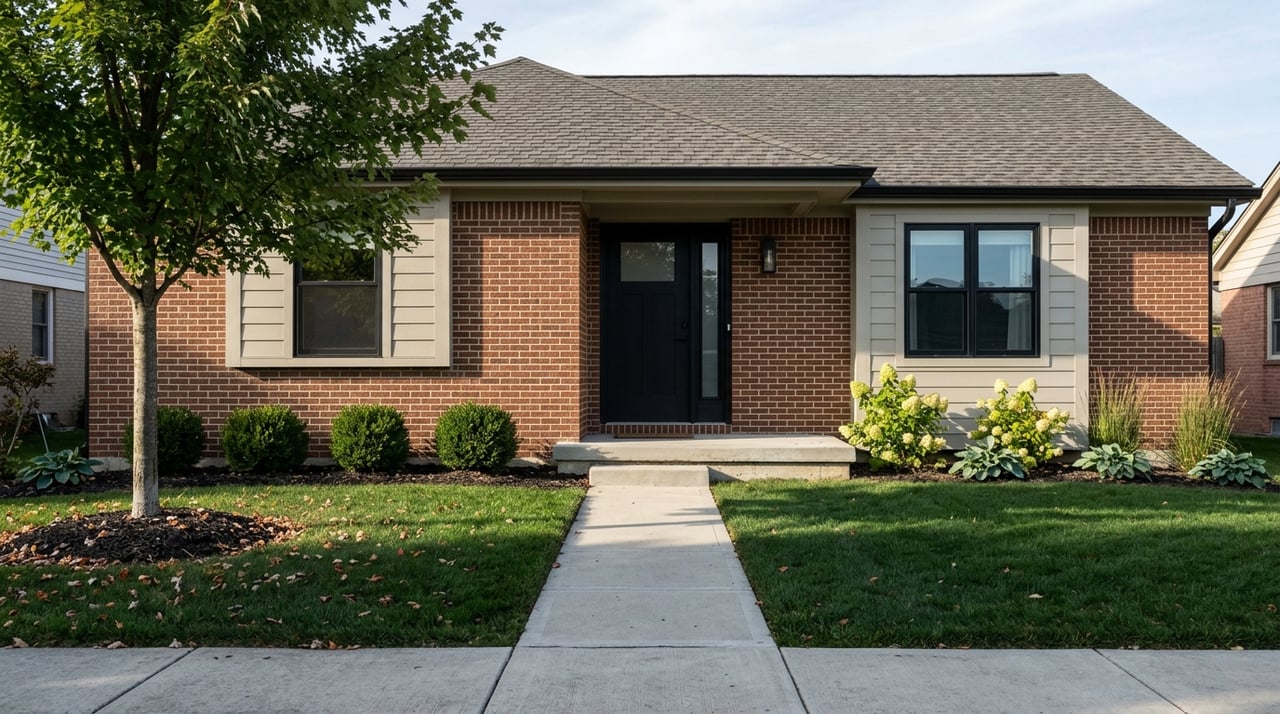
Buying Single-Family Rentals In Brownsburg: What Investors Weigh
July 2, 2026
July 2, 2026
If you are thinking about buying a single-family rental in Brownsburg, it is easy to focus on the monthly rent and assume the numbers will work. The reality is a little more nuanced, especially in a market where owner-occupants are active and home prices can stay firm. If you want to invest with more confidence, it helps to understand what experienced buyers really weigh before they make an offer. Let’s dive in.
Brownsburg has several signs of stable long-term housing demand. The town had an estimated population of 33,430, and that population grew 15.2% from the 2020 census base to the 2024 estimate. It also has a 75.1% owner-occupied housing rate, median household income of $102,235, and a median gross rent of $1,486 in the 2020-2024 ACS period.
For an investor, that points to a market that tends to attract long-term households more than highly transient renters. Brownsburg also reports more than 300 acres of parkland and 20 miles of trails, which supports its appeal as a stable suburban community. That does not guarantee performance, but it helps explain why single-family rentals can attract consistent demand here.
One of the first things investors weigh is the difference between broad rent data and live asking rents. Census data shows a median gross rent of $1,486, while Zillow’s 46112 rent index listed an average rent of $1,996 per month. Those numbers measure different things, so they should not be treated as a direct mismatch.
For practical underwriting, the investable single-family segment in Brownsburg appears closer to current live-listing pricing than to the broader census median. Recent Zillow rental pages showed 188 active rentals in 46112 and 110 houses for rent in Brownsburg. Current house examples were mostly 3- to 4-bedroom homes renting from roughly the mid-$1,600s to about $2,900 per month, depending on size and finish level.
That range matters because not every house will support top-of-market rent. A clean, updated property may compete well, while a home with dated finishes or deferred maintenance may need a lower asking price to lease efficiently. Conservative rent assumptions usually matter more here than optimistic ones.
Investors also need to weigh the relationship between purchase price and rent. Zillow’s 46112 home-values page put the typical home value at $361,711, with a median sale price of $331,150. Homes were also going pending in about 9 days, which suggests a market where desirable properties can move quickly.
That kind of pricing environment can make Brownsburg feel more competitive than bargain-oriented. You may still find a workable rental, but the market does not look like one where weak numbers are likely to be rescued by unusually low acquisition cost. Brownsburg appears better suited to investors who value steadier demand and are willing to buy carefully.
It is tempting to underwrite a rental based on future value growth, especially in a growing suburb. But Brownsburg’s one-year market forecast in the research was 0.5%, which is a useful reminder to stay grounded. A modest forecast does not mean the market is weak, but it does suggest that rapid appreciation should not be the main strategy.
A stronger approach is to treat appreciation as a possible long-term bonus, not as the reason the investment works. If a property only makes sense when you assume aggressive future value gains, the margin may be too thin. In Brownsburg, solid fundamentals matter more than speculation.
In Indiana, rental-property tax treatment is a major part of underwriting. The homestead deduction applies to a principal residence and does not include investment or rental property. That means an investor should not expect the same tax treatment an owner-occupant might receive.
The state’s circuit-breaker caps are also different by property type. According to Indiana DLGF materials, the cap is 1% for homesteads, 2% for other residential property, and 3% for nonresidential property. For a single-family rental, that distinction can have a real effect on your annual carrying costs.
The exact tax bill also depends on the parcel’s taxing district. In DLGF’s 2026 tax-rate table for Hendricks County, the Brownsburg Civil Town district rate is 2.7114 per $100 of assessed value, while the Bburg-Brown taxing district is 2.7091. The rates are close, but the key takeaway is simple: verify the specific parcel instead of assuming one zip-code-wide number.
Many first-time investors underestimate the gap between gross rent and actual net performance. Common rental expense categories include advertising, cleaning and maintenance, commissions, insurance, interest, legal and professional fees, management fees, repairs, taxes, and utilities. Those line items can add up faster than expected, especially during turnover.
The repair-versus-improvement distinction matters too. A home that rents well on paper can still underperform if you underestimate maintenance or capital spending. Even a few larger projects can change your return substantially.
For that reason, a Brownsburg rental should be modeled with room for routine upkeep and occasional larger costs. A tighter pro forma may look attractive at first glance, but it usually creates more risk than protection.
In Brownsburg, local operations can affect both your timeline and your budget. The town’s utility application requires renters to provide a lease copy and pay water and sewer deposits. That means utility setup may become part of your leasing and turnover planning.
The town’s building-inspections page also states that permits are required for new construction, additions, remodels, and electrical, mechanical, and plumbing repairs. Inspections must be requested two business days in advance. If your make-ready work touches systems or structure, your vacancy period and prep costs may be higher than expected.
This is one reason experienced investors often look beyond cosmetic condition. A home that seems like a simple refresh can become more complicated if the work involves systems, permits, or inspection timing. That is not a reason to avoid the property, but it is a reason to budget carefully.
Cash flow is not just about collecting rent. It is also about managing the move-out process correctly. Indiana’s rental compliance guidance says landlords must send an itemized notice and any remaining security deposit within 45 days after termination, once the tenant has provided a forwarding address.
If a landlord does not comply, the tenant may recover the full deposit and reasonable attorney’s fees. For an investor, that makes documentation and deposit accounting part of risk control. Clear records, photos, and timely communication can protect both your process and your bottom line.
Not every rental in Brownsburg will perform the same way. In a market like this, stronger deals usually share a few practical traits:
These are not flashy factors, but they often separate a durable investment from a stressful one. Brownsburg can reward discipline more than speed.
It is common for buyers to spend most of their time on list price and advertised rent. Those matter, but they are only part of the story. In Brownsburg, the more important questions are often about tax treatment, true operating costs, make-ready scope, and whether the house fits the strongest part of local rental demand.
You also want to think about your margin for error. If the numbers only work when everything goes right, the property may be too thin. A better target is a home that still makes sense when you use conservative rent and expense assumptions.
Buying a single-family rental in Brownsburg is not just about finding a house with a leaseable floor plan. It is about weighing neighborhood-level pricing, speed of market, condition, and resale flexibility along with the rental math. In a competitive suburban market, those details can shape your result as much as the headline numbers.
If you want help evaluating homes in Brownsburg or anywhere in Hendricks County, Scott Harmeyer can help you compare options, pressure-test the numbers, and make a more informed decision.
Stay up to date on the latest real estate trends.

Whether you are buying, selling, or looking to get pre-qualified, you’ve come to the right place to achieve success in our exciting housing market. Feel free to reach out anytime with any questions or comments!