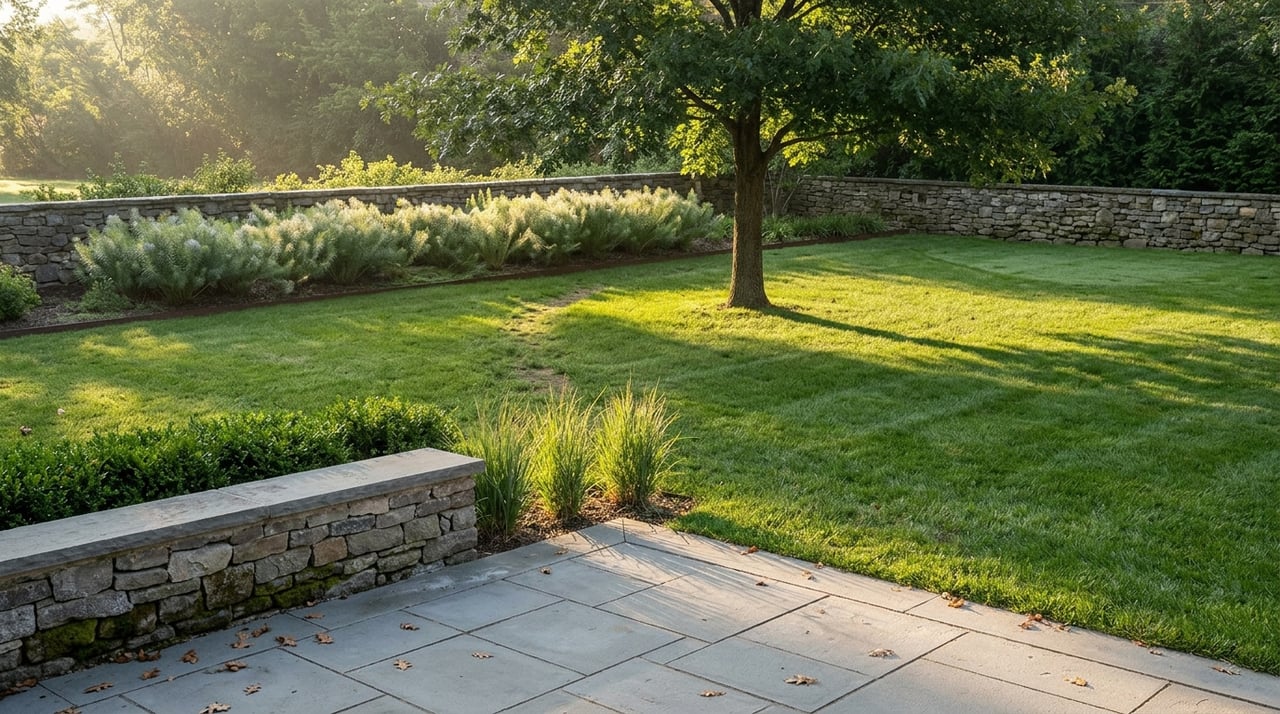
The Grand Park Effect: What Westfield's Median Home Price Doesn't Tell You
August 27, 2026
August 27, 2026
Redfin's numbers for Westfield in February 2026 don't quite add up on their own. The median sale price hit $489,000, up 17.4% from a year earlier. At the same time, homes took a median of 69 days to sell, nearly double the 43 days from February 2025. Only 77 homes changed hands that month, down from 106 the year before.
A market where prices jump nearly a fifth in a year should be moving fast, not slowing down. So which number is lying? Neither, actually. The answer is that "Westfield" isn't one housing market. It's at least three, stacked under a single ZIP code and a single median, and the mix of which one happens to sell in a given month can swing that median more than any actual change in what a house is worth.
When only 77 homes close in a month instead of 106, each sale carries more weight in the citywide number. If a handful of those closings happen to be custom estates instead of starter townhomes, the median jumps even if no individual home appreciated by 17%. That's likely part of what happened in Westfield this winter. Zillow's home value index, which tracks the same set of existing homes over time rather than whatever happens to sell in a given month, shows Westfield's typical home gaining somewhere between 0.7% and 3% over the past year as of mid-2026. That's a very different story from Redfin's median, and the gap between the two is the tell. One measures appreciation. The other measures what kind of home happened to close.
By spring, the picture normalized. Data pulled in July 2026 showed the median days on market back down to around 38, with homes selling for about 99% of asking price. More transactions, a broader mix, and the median stopped swinging so hard.
The reason the mix matters so much in Westfield is that the city's subdivisions don't sell to the same buyer. Here's what separates the three that come up most often in local conversation:
| Subdivision | Typical price range | What you're buying | Relationship to Grand Park |
|---|---|---|---|
| Chatham Hills | Roughly $950,000 to $4.5 million and up | Custom estates in a gated community built around two Pete Dye-designed golf courses and a 65,000-square-foot clubhouse | Golf-course living, not sports-campus proximity |
| Lancaster | Starting in the $400,000s | New construction townhomes and single-family homes from Pulte and Lennar | Sits directly across from Grand Park, with its own trailhead park and direct trail access |
| Grassy Branch / Lakes at Grassy Branch | High $200,000s to $300,000s for townhomes, climbing considerably higher for custom lake-access homes | Modern Craftsman-style homes on larger lots, some with direct lake access | A short drive from the campus, without Lancaster's foot traffic |
A buyer comparing a $310,000 townhome in Lakes at Grassy Branch to a $1.9 million estate in Chatham Hills isn't shopping the same city in any meaningful sense. They're shopping product types that happen to share a school district and a mayor. When the mix of what sells shifts even slightly toward one end of that table, the citywide median moves in ways that have nothing to do with what your specific house is worth.
None of this stratification is an accident. It traces back to one piece of infrastructure: Grand Park itself, and the city's deliberate strategy of building around it.
In March 2026, the City of Westfield selected the Nicholas Family of Companies to develop an ice hockey facility inside the Grand Park District, with three NHL-sized rinks and room to expand to a fourth. It's the company's first project outside the Chicago market, and the price tag runs to $88.6 million. Mayor Scott Willis was direct about why the city is spending that kind of money on ice: Grand Park's tournament calendar has always been busy for five months a year and quiet for the other seven, and he called the sports campus "our biggest economic engine for Westfield." A consulting analysis from Hunden Partners projects the arena could generate roughly $498 million in new spending over 30 years, $220 million in new earnings, and more than 105 full-time jobs, plus close to $8.7 million in county hotel tax revenue.
The city didn't guess at winter demand. Grand Junction Plaza downtown already runs a seasonal ice rink each year, and it's done well enough that betting $88.6 million on a permanent, four-season version made sense to city leadership. In January 2026, Westfield also finalized a separate public-private agreement tied to Grand Park projected to generate more than $184 million in city revenue.
That's the engine behind why Lancaster exists as an entry point next to the campus, why Chatham Hills can charge a premium for distance from the crowds, and why builders keep landing in Westfield instead of slowing down the way some of its Hamilton County neighbors have.
For years, the pitch for Westfield was simple: Hamilton County schools and a growing sports economy, at a real discount to Carmel. That gap is narrowing. Against Westfield's $489,000 median in February 2026, Carmel's average home value sat around $524,733, up just 2.9% year over year over the same period. Metro-wide appreciation across greater Indianapolis was projected in the 3.2% to 4.5% range for all of 2026. Westfield, even accounting for the mix-shift noise in its median, has been appreciating well ahead of that pace.
None of this means Westfield has caught up to Carmel on price. It means the buyer who assumed Westfield would always be the clearly cheaper option should check that assumption before writing an offer, especially in the subdivisions closest to the sports campus.
A citywide median is a headline, not a budget. If you're looking at Westfield, the number that matters is what's closed recently in the specific subdivision you're considering, not what closed citywide last month. A home that's sat 60 or 70 days in a slower pocket of the market may carry real room to negotiate on price or closing costs, even while the city's overall median looks hot. That's the kind of subdivision-level read that a general market report can't give you, and it's exactly where local, comp-by-comp guidance earns its keep.
Is Westfield's median home price a reliable number to budget against? Not on its own. Given how differently Chatham Hills, Lancaster, and Grassy Branch price out, the citywide median can be pulled in either direction by which subdivision happens to close in a given month. Pull comps at the subdivision level instead.
Will homes near Grand Park get more expensive once the ice arena opens in 2028? There's no guarantee, but the pattern in Westfield has been that proximity to confirmed infrastructure tends to draw buyers before a project finishes, not after. Lancaster's popularity as an entry point next to an already-built sports campus is a reasonable preview of how buyers might respond to the ice facility once it's under construction.
If you're weighing Westfield against Carmel, Noblesville, or another Hamilton County suburb and want someone who tracks these subdivisions closing by closing rather than city by city, Scott Harmeyer can walk you through what a specific price point actually buys right now. Book a consultation and let's find the pocket of Westfield that fits your budget and your reasons for moving there.
Stay up to date on the latest real estate trends.
Whether you are buying, selling, or looking to get pre-qualified, you’ve come to the right place to achieve success in our exciting housing market. Feel free to reach out anytime with any questions or comments!