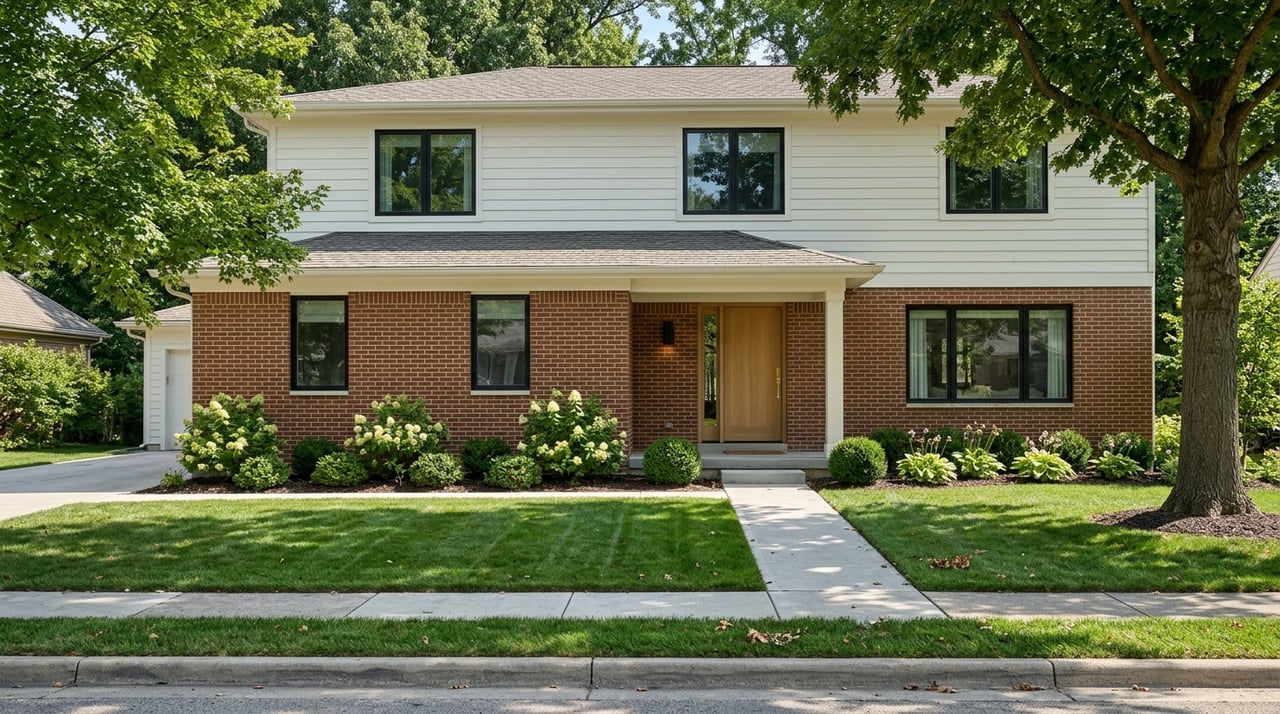
Established vs. Newer Neighborhoods In Avon Explained
June 11, 2026
June 11, 2026
Wondering whether an established Avon neighborhood or a newer one is the better fit for your next move? It is a smart question, because in Avon, neighborhood age can shape things like HOA structure, amenities, commute convenience, and overall feel, but it does not tell you everything about lot size, rules, or lifestyle. If you are comparing homes in 46123, this guide will help you look past simple old-versus-new assumptions so you can focus on what really matters for your day-to-day life. Let’s dive in.
Avon was not built all at once. The town’s rezoning history shows multiple waves of residential growth, with neighborhoods from the late 1990s and early 2000s sitting alongside projects approved in the 2010s.
That matters because you are not just comparing home age. You are also comparing different planning styles, different HOA setups, and different ways neighborhoods use land for homes, open space, and amenities.
For example, Avon’s rezoning history includes older subdivisions such as Waterford Lakes, Groves of Beechwood Farms, Woodland Heights, Persimmon Grove, and Stoney Meadow. It also includes newer areas such as Settlement Parcel D, Brownstone, Camden, and Settlement West.
In Avon, established neighborhoods often mean communities that were developed in earlier phases of the town’s growth, especially in the late 1990s and early 2000s. These areas may offer a more settled identity simply because they have had more time to mature.
That can show up in the look and feel of the neighborhood, but also in how the community is governed. In other words, an established neighborhood is not just an older set of homes. It may come with a very different ownership experience.
One of the biggest differences in older Avon neighborhoods is that HOA structure is not always one-size-fits-all. Some communities are self-managed, while others may have voluntary participation.
For example, Stratford of Avon describes itself as a self-managed neighborhood where the board handles common areas, architectural approval, and covenant enforcement. Timber Bend describes its HOA as voluntary and focused on entryway maintenance, long-term value, and oversight of original covenants and restrictions.
That is important because many buyers assume older neighborhoods automatically have fewer rules. In Avon, that is not always true.
Even if a neighborhood has its own HOA setup, town ordinances are still part of the picture. Avon’s code-enforcement guidance makes clear that ordinance compliance is treated as a property-value and public-safety issue.
For you as a buyer, that means HOA rules and town rules should be viewed as separate layers. Before you buy, it is worth understanding both.
Many established neighborhoods feel less uniform than newer developments, but that should be treated as a general pattern, not a guarantee. Some buyers like that more varied look, while others prefer a more consistent streetscape.
The key point is that established neighborhoods in Avon can offer a more mature identity, but the details still depend on the specific subdivision.
Newer neighborhoods in Avon are often shaped by a more structured planning process. The town’s development framework requires proposed commitments related to architecture, infrastructure, land use, development standards, and maintenance of open space or facilities that are not publicly dedicated.
Applicants may also need to provide traffic, fiscal, phasing, and open-space analysis. That helps explain why newer neighborhoods often feel more planned and more coordinated from the start.
Current new-construction examples in Avon include Brookstone, Whispering Pines, Rivendell, and Aspen Trace. Builder descriptions for these types of communities often highlight features such as pocket parks, walking paths, playgrounds, pond views, cul-de-sac homesites, slab and basement options, and upgraded exterior elevations.
If you want a more turn-key feel, this can be appealing. Newer neighborhoods may offer a lifestyle package that is built into the community from day one.
Because newer neighborhoods are shaped by current development standards and planned commitments, they often feel more visually consistent. That can include home styles, streetscape design, open-space placement, and community features.
Some buyers love that sense of coordination. Others may prefer the variety that often comes with neighborhoods built in earlier decades.
With newer communities, it is common for association expectations to be more clearly outlined up front. For example, Brookstone notes that community association and golf fees may be required.
That does not mean newer is better or worse. It simply means you should expect a more structured setup and review those details closely before making a decision.
This is one of the biggest myths buyers run into. In Avon, lot size and density are subdivision-specific, not simply tied to whether a neighborhood is established or newer.
The town’s acreage-and-units data shows a wide range. Selected examples include roughly 0.13 acres per unit in Settlement Parcel D, about 0.21 in Groves of Beechwood Farms, about 0.28 in Waterford Lakes, and roughly 0.55 in Settlement West.
That means you should not assume an older neighborhood automatically gives you a bigger yard. You also should not assume a newer one always means a smaller lot.
When you compare homes, focus on the actual layout and usable space, not just the neighborhood’s age.
Ask questions like:
These questions usually tell you more than the build date of the subdivision.
For many Avon buyers, commute matters just as much as the neighborhood itself. Avon sits on US-36 and near I-465, I-74, I-70, and I-65, and Ronald Reagan Parkway is being built in segments through the eastern part of town to connect I-70 to I-74.
The town also notes that Indianapolis International Airport is less than ten minutes away and downtown Indianapolis is about a half-hour away. That makes route access a practical part of your home search.
Homes closer to US-36 or Ronald Reagan Parkway may be more appealing if you want to simplify your daily drive. Interior neighborhoods may offer a quieter subdivision setting, but they can change your daily travel pattern.
This is not about one area being better than another. It is about matching the neighborhood location to your routine.
Avon offers a strong town-wide amenity network. The town supervises more than 100 acres of park land and open space, including Town Hall Park, WWII Memorial Park, Gable Park, Winton Meadows Park, White Lick Trail, Foundation Ballpark, and Apex Ballpark.
The town also hosts the Avon Farmers Market during the summer at the Hendricks Regional Health parking lot. For many buyers, these amenities are part of what makes Avon attractive overall.
Newer neighborhoods often market their own trails, pocket parks, playgrounds, or pond views. Established neighborhoods may lean more on nearby town parks and Avon’s broader park system.
Neither approach is automatically better. The question is whether you want amenities inside the subdivision, nearby around town, or a mix of both.
If school assignment is part of your decision, the most important thing to know is that Avon Community School Corporation serves Washington Township and handles boundaries at the neighborhood level. The district serves nearly 11,000 students across 13 schools, including eight elementary schools, three middle schools, one high school, and the White Oak Early Learning Center.
Because boundaries can change through redistricting, buyers should verify school assignment by exact address or neighborhood map. When you compare established and newer neighborhoods, this can be a more important lifestyle factor than the age of the subdivision itself.
The best Avon neighborhood for you depends on how you live, not just what year the homes were built. Established neighborhoods often appeal to buyers who want a more mature neighborhood identity and sometimes different HOA structures, including self-managed or voluntary setups.
Newer neighborhoods often appeal to buyers who want newer floor plans, planned amenities, and clearly defined development standards. But neither category has a monopoly on bigger lots, lower maintenance, or stronger resale potential.
As you narrow your options, keep these practical questions in mind:
When you ask the right questions, the choice between established and newer gets much clearer.
If you are weighing neighborhoods in Avon and want help comparing the details that matter most, Scott Harmeyer can help you sort through lot layouts, commute tradeoffs, HOA structures, and neighborhood differences so you can make a confident move.
Stay up to date on the latest real estate trends.



Whether you are buying, selling, or looking to get pre-qualified, you’ve come to the right place to achieve success in our exciting housing market. Feel free to reach out anytime with any questions or comments!